BathMETRIC
Specialist Bathroom Inspections
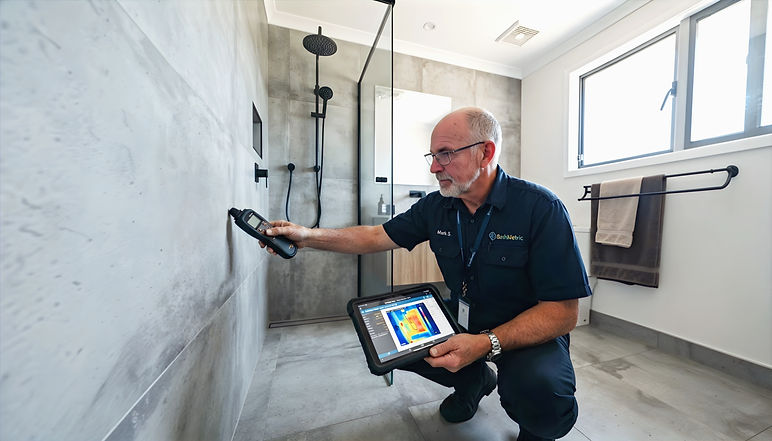
Tile Spot-Fixing IR Scan
Worried about your tiling?
Your tiles look fine, but you’re unsure how well they’re bonded or whether they’ve been installed correctly. BathMetric combines visual checks and infrared imaging to assess tile-fixing concerns and identify areas that may need further investigation.
Clear findings. Practical next steps.
Your report explains the findings in plain language. It provides a record you can use to plan maintenance, discuss repairs or arrange further investigation.
-
Understand the concern: Photographs, relevant thermal images and readings showing the conditions identified and what may be contributing to the problem.
-
Decide what comes next: Prioritised recommendations for attention, monitoring or further checks, including anything the inspection could not establish.
-
Ask questions: One clarification call to discuss your report and recommendations.
How we investigate.
We start with your concerns and any available installation information or photographs. We then consider the visible condition and thermal observations together.
-
Visible checks: We examine accessible tiles, grout and junctions, recording relevant cracking, damage or apparent movement.
-
Infrared scan: We examine selected accessible tiled areas where conditions support useful thermal interpretation.
-
Putting the findings together: We record the areas of concern, explain possible interpretations and identify where further checking is needed.

What is spot-fixing?
“Spot-fixing” is a descriptive tiling term for attaching tiles with separate dabs or blobs of adhesive rather than a continuous adhesive bed. You may also hear it called “spot bonding”, “dot-and-dab” or “dotting and dabbing”.
The concern is how much of the tile is properly supported and bonded to the surface behind it: separate adhesive spots can leave substantial gaps, concentrating the load on smaller areas of contact. Our assessment looks for indications that the fixing arrangement may need closer investigation, rather than judging the installation by its finished appearance alone.
The name of the method does not, by itself, establish a defect: specialist structural-epoxy systems can allow spot bonding in specified applications, unlike conventional cement-based adhesive installations. We consider the available installation information alongside our findings and explain what remains uncertain.
If you’d like to understand more about spot-fixing and adhesive coverage, explore the tiling and waterproofing industry guidance documents.
Why adhesive coverage matters
For conventional adhesive-bedded wet-area tiling, the guidance in AS 3958:2023 specifies a minimum of 90% adhesive contact coverage, with even distribution and full support around tile edges. This means actual contact between the adhesive and the tile and supporting surface after bedding, not simply the amount of adhesive applied.
The installed system’s manufacturer instructions must also be followed. BathMetric’s scan can help identify areas for further investigation, but it does not measure or certify the adhesive coverage percentage.
Thermal imaging: looking beyond appearances.
Even if your tiles look fine, an infrared scan can help identify areas that deserve a closer look. We examine surface-temperature patterns without removing the tiles.
Under suitable conditions, these patterns may indicate gaps or uneven adhesive contact beneath the tiles. We consider them alongside visible findings and the inspection conditions, because reflections and temperature changes can also affect what the camera shows.
You receive relevant thermal images with a clear explanation of what they suggest and what to do next. If the scan is inconclusive or further checks are needed, your report will say so.
Also concerned about a leak?
Tell us if you have noticed water outside the shower, damp patches or other moisture concerns. We can discuss a Moisture Inspection or a suitable combination, rather than treating the tile scan as a leak test.
Scope and limits.
This is a non-destructive assessment of selected accessible tiled areas. It does not measure bond strength, establish exact adhesive coverage or certify the installation or waterproofing.
Tile removal, opening the construction, bond-strength testing, flood testing and repairs are not included. Where confirmation requires invasive investigation or specialist assessment, your report will explain the recommended next step; separate scope and permission would be needed.
A thermal indication is not confirmation of spot-fixing. Equally, a scan showing no concerning pattern does not guarantee that the installation is defect-free.